 |

|
Loyalist Families in Georgia and what became of them
If you are tracing your family history during the colonial years of the colonies, you may wish to consider the possibility that their loyalities to the king carried over into the Revolutionary War, when there were two sides; Patriots and Loyalists. Throughout the Revolutionary War there were known loyalists in the colony, those who sided with the British. On December 29, 1778 Savannah fell to the British forces and the rebel defenders were routed, losing 550 catured or killed. As Patriot forces were swept from the State, a bitter civil war ensued between the Patriots and the Loyalists. Only a year later, during the fall of 1779, the Continental army with help from French forces, attempted to liberate the city from its occupation without success.
Baillie, George
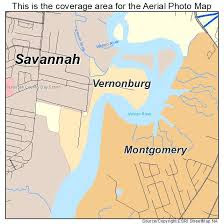 GEORGE BAILLIE was a descendant of the Scottish Highlanders and owned plantations in McIntosh and Liberty counties. He received a Land Grant of 350 acres in St. Thomas Parish on Oct. 31, 1765 and 300 acres, same parish, Oct. 31, 1765; and 1000 acres in St. Pauls Parish, on Sept. 2, 1766. This land was on Spirit Creek where he built a sawmill, later acquiring another 1000 acres (Nov. 1771) on the south side of Great Satilla River, which he cleared with the help of eight negro slaves, constructing another sawmill. He supplied great quantities of timber to the settlers in Augusta and Savannah.
George Baillie resided in Augusta. He took a seat in the Georgia Assembly in January of 1761. In 1764 he was again elected as a Member of the House representing St. Paul's Parish (Augusta), which he declined because of private reasons, and did not take a seat in the General Assembly again until April of 1772, this time representing the Vernonburg District.
When the Revolutionary War began, George Baillie, still active in the affairs of His Majesty, wrote a letter to the Commissary General complaining of the removal of stores, cannons, carriages, etc., and was told to tell the persons doing it to stop.
After the war, in 1785, 1,000 acres of confiscated land belonging to George Baillie was sold to Robert Forsythe.
June 19, 1782, 3,000 acres of confiscated land of the late Robert Baillie was sold to Roger Sanders.
Delegel, David
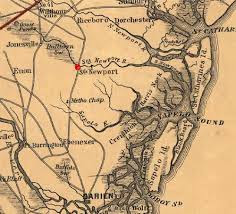 David Delegal was granted 100 acres on the South Newport River, adjoining lands of John Jones and John Barger in May of 1771; also 450 acres on South Newport River, St. Andrew's Parish, bounded on the south by lands of Roderick McIntosh. He was raised in the Province of Georgia, and was probably a son of Lt. Philip Delegal of the Regiment of General Oglethorpe. At the time of the land grant, he owned nine slaves. During November of the same year, he received 54 acres and 300 acres in St. Andrew's Parish. At the onset of the Revolutionary War, David Delegal was faithful to Great Britain, therefore, in 1782, his estates were confiscated and he was declared guilty of Treason.
He probably went to Barbados as there is mention of him in the West Indies in 1737 called Delegal and De LeGual.
Source: Calendar of Colonial State Papers, Colonial America and West Indies; Biographical sketch of Delegal by Jeannette Holland Austin on Georgia Pioneers
Houstoun, Sir Patrick

 Sir Patrick Houstoun (1698-1762) was the grandson of the Scottish knight and baronet Sir Patrick Houstoun, Patrick Houstoun left Scotland in 1734 and settled near what is now Richmond Hill, Georgia, land that would later belong to Henry Ford. When his cousin, Sir John Houstoun died without male heirs, the title of baronet passed to Patrick. Houstoun then entered the political arena, serving all three royal governors. He was soon appointed as a member of the Royal Council of Georgia and was soon appointed the ranking member. His duties consisted of advising the governor on matters ranging from Indian affairs to matters of public safety. He also sat on the Upper House of Assembly which was affiliated with the Royal Council which convened daily when the council was in session. In addition, Houstoun assumed the position of Registrar of grants and receiver of quit rents, which were notoriously difficult to collect. He also served as commissioner for defense of the colonies. Houstoun died in 1762, leaving everything to his wife, Priscilla who had borne him six children. The title of baronet passed to his twenty year old son, also named Patrick.
After the war, the family estate of the elder Sir George Houstoun near Darien, Georgia was
confiscated on June 19, 1782 and included 2500 acres on Cat Head Creek on the Altahama River, was purchased on the same date by William Houstoun for which he provided a $25,000 bond.
William Houstoun, 500 acres of confiscated land on the Great Ogeechee River belonging to the late George Houstoun. June 13, 1782.
Any members of the family who were loyalists after the war probably removed to Nova Scotia, the family seat.
Sources: Dictionary of Georgia Biography ; Confiscated Sales of Estates found on Georgia Pioneers
McIntosh, George
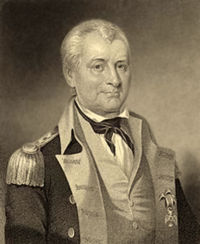 One of the colony's most valiant Generals, Lachlan McIntosh came under criticism for his family connections. In 1770 Lachlan was a leader in the independence movement in Georgia and during January of 1775 helped to organize delegates to the Provincial Congress from the Darien District. In January of 1776 he was commissioned as a colonel in the Georgia Militia and raise the First Georgia Regiment of the Georgia Line, which was organized to defend Savannah and help repel a British assault at the Battle of the Rice Boats in the Savannah River. He was promoted to the rank of brigadier general in the Continental Army, charged to defend the southern flank of Georgia from British incurisions from Florida. During 1776 and 1777, McIntosh was embroiled in a bitter political dispute with Button Gwinnett, the Speaker of the Georgia Provisional Congress and a radical Whit leader. The dispute began when McIntosh succeeded Gwinnett as commander of the Georgia Continental Battalion. The two men represented opposing factions in the Patriot cause and Gwinnett was asked to step aside after his election was called into question by opposition within the movement. However, Gwinnett went on to become a delegate to the Continental Congress and signer of the Declaration of Independence. He returned to Georgia after his allies gained control of the Provisional Congress and succeeded in electing him speaker and commander-in-chief of the Committee of Safety. Hence, he began purging the government and military of his political rivals. His target was George McIntosh, the brother of Lachlan. He then ordered General McIntosh into British Florida on a poorly planned military expedition which failed. Gwinnett and McIntosh publicly blamed one another for the failure.
Meanwhile, in January of 1777, George McIntosh was placed in irons in the Savannah jail. His brother, Lachlan McIntosh, angrily fought for his release, finally obtaining it for 20,000 pds. George McIntosh was married to a daughter of Sir Patrick Houstoun (loyalist) and previously held positions of honor and trust. In 1766 he was a surveyor appointed by the General Assembly to lay out roads, and in 1776, a member of the Commons House Assembly. During 1777, George became unpopular in political circles when a proposal was made by Governor John Treutlen to unite South Carolina and Georgia. His contemporaries accused him of collaborating with the British during the war and shipping 400 barrels of rice down the St. John's River for use by the enemy.
The quarrel with Button Gwinnett continued.
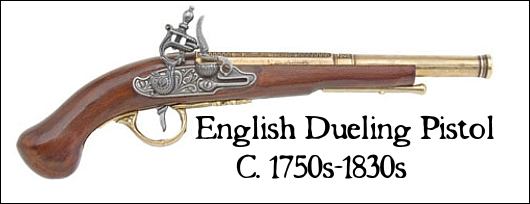 In May of 1777, Lachlan McIntosh addressed the Georgia Assembly and denounced Gwinnett, calling him a scoundrel and lying rascal. Gwinnett retaliated by sending McIntosh a message demanding an apology or satisfaction. McIntosh refused to apologize and Gwinnett challenged him to a duel. On May 16th, they met in a field owned by James Wright several miles east of Savannah. The men fired their pistols almost simultaneously, and both men were injured, McIntosh in the leg and Gwinnett in the thigh. Three days later Gwinnett died from his wounds. His last will and testament (the first to be filed in Savannah) is found on Georgia Pioneers.
The following year McIntosh was sent to command the Western department of the Continental Army at Fort Pitt, Pennsylvania where he planned a failed expedition against Fort Detroit. Afterwards, he was replaced by Colonel Brodhead and returned to the South where he joined General Benjamin Lincoln in Charleston, South Carolina. McIntosh served with distinction throughout the war, but rumors were passed that his brother George was rendering aid to the enemy by running supplies to the British.
George McIntosh died in 1779 during the siege of Savannah by the British. His estates were confiscated. Lachlan, his brother, desperately fought to recover the estates and titles, but was only successful in having some personal effects sent to his plantation on Sapelo Island. Lachlan, arrested himself by the British during combat at Charleston in 1780, returned home to find the effects and papers of his brother, George, scattered about in unlocked trunks. Land grants and deeds had been placed in a small portmanteau trunk by the wife of George, and these were the only valuable assets retained by the family. Source: McIntosh Genealogy by Jeannette Holland Austin.